
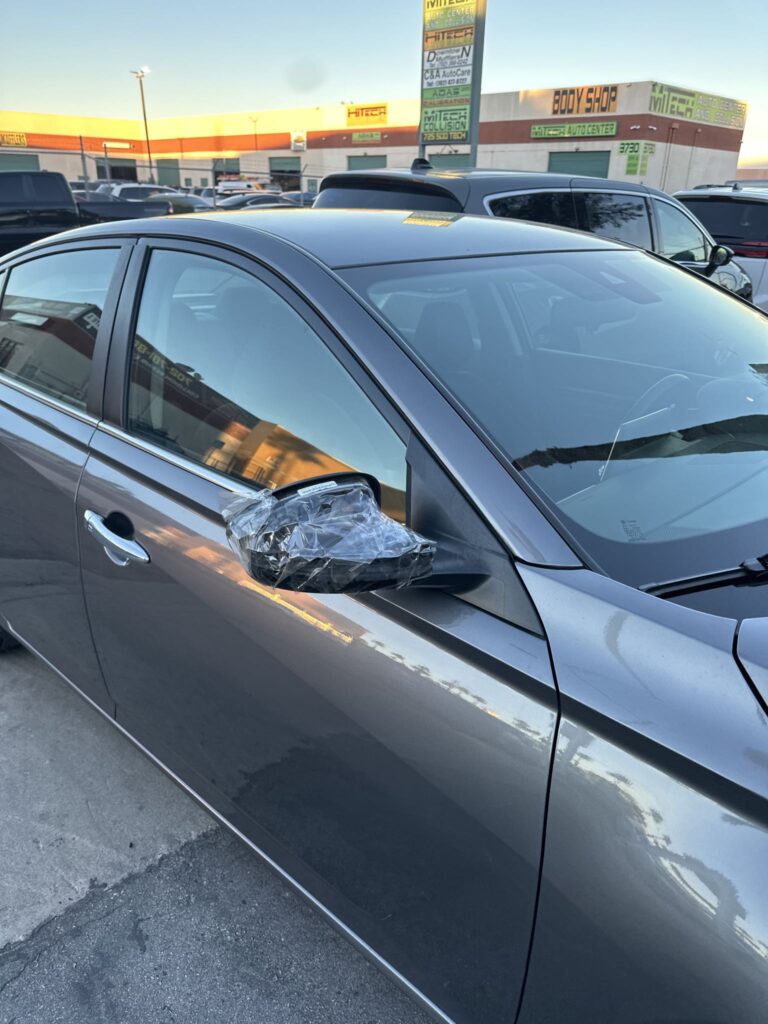
Hailstorms often leave vehicles looking mostly intact. From a distance, the paint still shines, and the body panels appear smooth. This is why many car owners assume hail damage is only cosmetic and not urgent. In reality, small hail dents behave very differently from other types of vehicle damage, and ignoring them can quietly create bigger problems over time.
Hail damage is unpredictable, widespread, and often deceptive. Understanding why these small dents matter helps protect your vehicle’s appearance, value, and long-term condition.
Why Hail Damage Often Goes Undetected After a Storm
Hail dents are difficult to see immediately after a storm. Dust, moisture, and uneven lighting hide subtle distortions in the body panels. Many dents only become visible after the vehicle is washed or parked under direct sunlight.
Vehicle color also plays a role. Lighter colors reflect light differently, making dents less noticeable at first. Curved panels like roofs and hoods further disguise damage until the angle is just right. Because of this, many drivers underestimate the severity of hail damage during initial inspections.
How Hail Impacts Create Internal Panel Stress
Unlike a single collision impact, hail strikes hit panels at random angles and varying speeds. Each impact introduces a small stress point into the metal. When dozens or even hundreds of these strikes occur, stress zones form beneath the surface.
These stress zones weaken the natural balance of the panel. Even when dents appear shallow, internal tension remains. Over time, this tension affects how the panel responds to heat, cold, and vibration.
The Science Behind Small Hail Dents That Do Big Damage
Automotive panels are engineered to flex within specific limits. Hail impacts push metal beyond its natural elasticity in small areas. While the paint may remain intact initially, the clear coat experiences microscopic strain.
As temperatures change, metal expands and contracts. These cycles slowly amplify the damage beneath the surface. What begins as a barely visible dent can evolve into surface waviness, paint cracking, or weakened protective layers months later.
Why Waiting to Repair Hail Damage Is Risky
Delaying hail damage repair allows these stress points to settle permanently. Once metal tension stabilizes incorrectly, repair options become more limited. Paintless techniques may no longer be effective, and traditional repairs may be required.
Moisture intrusion is another concern. Even without visible paint damage, compromised clear coat layers allow moisture to penetrate. This process accelerates oxidation and corrosion, especially in roof and hood panels exposed to constant environmental stress.
How Ignored Hail Damage Affects Vehicle Value and Appearance
Buyers and appraisers are trained to detect subtle irregularities. Reflection distortion across a panel often signals prior damage, even when repairs were attempted. These visual cues reduce buyer confidence and lower trade-in offers.
Hail damage also disrupts the uniform appearance of the vehicle. Light reflections become uneven, especially on large flat panels. Over time, this cosmetic degradation becomes more noticeable and harder to correct.
Insurance Complications Caused by Delayed Hail Damage Repair
Insurance claims for hail damage rely heavily on timing and documentation. Delayed inspections make it harder to connect damage to a specific storm event. Weather verification becomes more complicated, and coverage disputes are more likely.
Waiting too long can also reduce repair flexibility. Insurance providers may limit options if damage worsens due to neglect. Early evaluation protects both coverage eligibility and repair quality.
Why DIY Solutions Rarely Work for Hail Damage
Hail damage presents a unique challenge because dents are often clustered across wide areas. DIY tools are not designed to manage multiple impact points with consistent accuracy. Accessing roof panels safely is especially difficult without professional equipment.
Glue pulling and suction methods may improve isolated dents, but often leave uneven tension behind. This creates surface inconsistencies that become visible later. DIY attempts frequently complicate professional repairs rather than solving the problem.
How Professional Hail Damage Repair Addresses Micro Damage
Professional hail damage repair focuses on restoring balance to the entire panel. Technicians use precision lighting to map every dent, including those not easily visible. This process ensures no stress point is overlooked.
Controlled metal relaxation techniques gradually return panels to their original contour. Paint-safe methods preserve factory finishes while correcting deformation beneath the surface. The result is a complete restoration rather than a temporary improvement.
Vehicle owners who want reliable results often turn to specialists with storm damage experience. Many drivers choose trusted professionals like Omega Collision because of their expertise in advanced hail damage repair, where preserving factory paint and vehicle value is the priority rather than quick cosmetic fixes.
When Small Hail Damage Signals a Bigger Repair Need
In some cases, hail damage reaches a saturation point. When too many impacts affect a single panel, metal elasticity diminishes. Signs include widespread surface waviness, reduced paint flexibility, and weakened bonding areas.
A professional evaluation identifies when repair remains viable and when replacement becomes necessary. Early intervention increases repair options and minimizes overall cost.
Why Addressing Hail Damage Early Protects More Than Just Appearance
Hail damage is rarely just about how a vehicle looks today. Small dents represent a shift in how a panel performs, ages, and holds its protective layers over time. When left unaddressed, these subtle changes quietly affect durability, finish quality, and long-term value.
Early attention allows repairs to be precise rather than corrective. Panels respond better, paint remains intact, and repair options stay flexible. Once damage settles and environmental exposure compounds the issue, even minor hail impacts can demand more invasive solutions.
Professional evaluation after a storm is not about urgency or fear. It is about control. Addressing hail damage at the right stage preserves the vehicle’s condition, protects its market value, and avoids unnecessary complexity later. For owners who view their vehicle as an investment rather than just transportation, ignoring small hail dents is a risk that rarely pays off.