
A BMW can look repaired and still feel wrong.
That is the part many drivers do not expect after a collision. They expect to worry about paint, dents, scratches, bumper damage, and whether the car looks the way it did before the accident. Those things matter, of course. A mismatched fender or uneven bumper corner can make even a beautiful BMW look neglected. But BMW owners often notice something deeper after repair.
The steering feels slightly different.
The car does not settle into the lane the same way.
The front end feels heavier than it used to.
A door closes, but the sound has changed.
The hood lines look acceptable, yet the car feels less composed on the road.
These are not imaginary concerns. BMW vehicles are built around feel. People buy them for more than transportation. They buy them because the car responds, balances, grips, turns, and communicates in a way that makes daily driving feel controlled. Even a small accident can disturb that connection if the repair is handled like ordinary cosmetic work.
BMW collision repair is not only about restoring the outside. It is about restoring the relationship between structure, body panels, suspension points, steering response, and driver confidence.
That is why the repair has to be judged by more than shine.
The BMW Owner Usually Knows When Something Feels Off
A driver who owns a BMW often knows the car better than anyone else. They know how the steering wheel feels on the 215. They know how the car settles when changing lanes. They know how the front end responds when pulling into a parking space. They know how the door sounded before the accident.
After a repair, that memory becomes important.
A technician may look at the vehicle and see that the bumper is fitted, the paint is blended, the wheels are aligned, and the warning lights are off. The insurance file may look complete. The car may even photograph beautifully. But the owner may still feel a change.
That change can come from several places. A small shift in body structure can affect fitment. A damaged fender area may influence nearby mounting points. A front-end impact can disturb bumper support, headlight alignment, hood positioning, or components near the suspension area. A rear hit can affect trunk alignment, bumper reinforcement, quarter panel fitment, or the way the vehicle tracks after repair.
The owner may not know the technical cause, but they can feel the result.
This is why Omega Collision Center treats BMW collision repair as more than a visible body repair. The finished vehicle has to look right, but it also has to feel right to the person who drives it every day.
A BMW Is Designed Around Balance
Every vehicle has body panels. Every vehicle has suspension. Every vehicle has steering. What makes a BMW different is how carefully those pieces are expected to work together.
A BMW is not only judged by whether it moves forward. It is judged by how it turns, how it holds the road, how it feels under braking, how cleanly the steering responds, and how stable it feels at speed. That driving character depends on balance.
Collision damage can disturb balance in ways that are not always obvious.
A front corner impact may bend or shift parts that influence how the fender, bumper, headlight, hood, and wheel opening relate to each other. A side impact may disturb door alignment, rocker areas, or quarter panel shape. A rear-end collision may affect the way the trunk, bumper, and rear body structure sit. Even when suspension parts are not visibly broken, the areas around them may need careful inspection.
The danger is assuming that if the BMW still starts, drives, and stops, the repair is simple.
A car can drive after an accident and still not be restored correctly. It can track straight during a short test drive while still having hidden structural or alignment concerns. It can feel acceptable at low speed but unstable on the highway. It can look repaired in the shop but reveal fitment flaws when parked under bright Las Vegas sunlight.
BMW repair quality lives in those details.
A proper repair does not only ask, “Can the car drive?” It asks, “Does the car feel like itself again?”
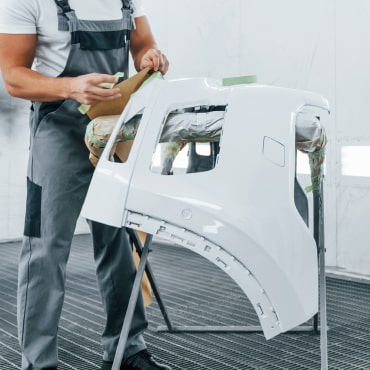
Appearance Still Matters, But It Is Only Half the Repair
No BMW owner wants a repaired car with mismatched paint, uneven gaps, wavy panels, or a bumper that does not sit flush. Appearance is part of pride of ownership. A BMW with poor body work loses the clean, confident presence that made it attractive in the first place.
But appearance can be misleading.
A repaired fender may look smooth while the wheel opening is not positioned correctly. A bumper may appear polished while the brackets underneath remain damaged. A hood may close, but the latch area may not sit exactly where it should. A door may line up from one angle, yet the seal may not compress evenly.
This is why a BMW repair should not be completed by appearance alone.
The surface tells one part of the story. The gaps, brackets, measurements, mounting points, and road behavior tell the rest.
At Omega Collision Center, the goal is not to make a BMW look repaired from ten feet away. The goal is to repair the vehicle with the kind of precision that supports fit, finish, structure, and driving confidence. A proper BMW repair should make the damaged area disappear visually, but it should also remove the small changes that make the owner feel something is still wrong.
A good repair should not keep reminding the driver that an accident happened.
Front-End Damage Can Change the Way a BMW Feels
Front-end collisions are common, and many of them look less serious than they are.
A cracked bumper, bent hood edge, broken grille, or damaged headlight may seem like an exterior issue. But the front of a BMW is a complicated area. It contains impact absorption parts, cooling components, lamps, sensor areas, panel mounting points, hood latch points, bumper reinforcement, and sometimes components tied to advanced driver assistance systems.
If the impact reaches beyond the outer cover, the repair must go deeper.
A front-end hit can affect how the hood sits between the fenders. It can shift headlight position. It can alter bumper cover fitment. It can create uneven gaps that make the car look slightly twisted even if the damage appears minor. More importantly, it can affect how the front of the vehicle feels while driving.
A BMW with poorly repaired front-end damage may feel less precise. The steering may not feel centered. The car may create new vibration. The hood or bumper may produce noise. The vehicle may not feel as stable at freeway speed.
These issues are not always caused by one dramatic failure. Sometimes they come from a chain of small inaccuracies.
One bracket is slightly off.
One panel is adjusted to hide a deeper problem.
One mounting point is not corrected.
One alignment concern is missed.
One damaged component is reused when it should have been replaced.
BMW front-end repair requires patience because the front of the car influences both appearance and road feel. When the hood, fenders, bumper, lights, and structural supports are not working together, the car loses the clean accuracy BMW owners expect.
Fender Damage Is More Than a Cosmetic Problem
A fender seems simple from the outside. It curves around the wheel, connects to the bumper, meets the door, and helps shape the side profile of the car. Because it is visible, many people think of fender damage as a cosmetic issue.
On a BMW, that is not always true.
A fender sits near critical fitment areas. It relates to the hood line, bumper corner, headlight position, wheel opening, door gap, and sometimes inner mounting points that help define the shape of the front corner. If a fender is pushed, twisted, or repaired without proper alignment, it can create several problems.
The tire may appear too close to one part of the opening.
The door gap may look uneven.
The bumper may not meet the fender cleanly.
The hood may appear shifted.
The body line may lose its natural flow.
Even if the fender is repaired and painted, the BMW may not look balanced from the side. Worse, if the damage affected nearby structural or mounting areas, the vehicle may not feel right.
This is why fender repair should include inspection beyond the dent. Technicians need to understand how the fender connects to surrounding panels and whether the impact traveled into areas that affect fitment or driving behavior.
A BMW’s side profile is designed with intention. A repaired fender should not interrupt that design.
Door Alignment Affects Sound, Feel, and Confidence
BMW doors are part of the driving experience in a subtle way. The way they open, close, seal, and sound all contribute to the feeling of quality. After a side impact or door-related collision, restoring that feeling can be more complicated than it appears.
A door can be repaired visually and still not be correct.
If the hinge area is affected, the door may hang slightly out of position. If the shell is distorted, the body line may not meet the fender or rear quarter correctly. If the seal does not compress evenly, wind noise or water intrusion may appear. If the latch alignment is off, the door may require more force to close.
These details matter in any vehicle, but they stand out more in a BMW because the car is expected to feel solid and refined.
A driver may notice the door sounds thinner than before. A passenger may feel air noise at highway speed. The window may not seal with the same tightness. The door may sit proud of the body by a small amount that becomes obvious in sunlight.
Proper door repair requires attention to the visible surface, the internal structure, the hinge and latch relationship, the body opening, and the surrounding panel gaps. If the impact force reached the pillar or rocker area, the repair becomes even more important.
A BMW door repair is not complete just because the paint looks good.
It is complete when the door fits, seals, closes, and feels right.
Rear-End BMW Collisions Can Hide Serious Repair Concerns
Rear-end accidents are often underestimated.
The rear bumper may absorb the first visible impact, but that does not mean the damage stops there. Behind the bumper cover are reinforcement components, absorbers, brackets, sensors, wiring, trunk-related structures, and panel connections that may be affected by the hit.
On a BMW, rear-end repair needs careful evaluation because the rear structure contributes to fitment, safety, noise control, and the clean look of the vehicle. A rear bumper that is slightly misaligned may create uneven spacing near the quarter panels. A trunk lid that does not sit correctly may point to hidden movement. A taillight gap may reveal that the surrounding panel is not positioned correctly.
Rear damage can also affect everyday use.
The trunk may close differently.
The rear bumper may rattle.
Water may enter around seals.
Parking sensors may behave oddly.
The car may feel unsettled if alignment or rear structure concerns remain.
Some rear-end repairs are straightforward. Others require deeper inspection and documentation. The difference depends on the force of impact, the angle, the model, and how the energy moved through the vehicle.
A BMW rear repair should never be judged by the bumper cover alone. The cover is only the outer layer. The real repair question is what happened underneath.
Steering Feel Can Reveal What the Eye Cannot
One of the clearest signs that a BMW needs a more careful collision repair is a change in steering feel.
BMW drivers are often sensitive to steering response. Even in newer models where steering systems have changed over time, the driver still expects the vehicle to feel controlled and predictable. After an accident, any difference in steering should be taken seriously.
A change in steering feel may come from suspension damage, alignment issues, wheel damage, tire impact, shifted mounting areas, structural movement, or components that were not inspected thoroughly. The vehicle may not always pull dramatically. Sometimes the issue is more subtle.
The steering feels heavier in one direction.
The wheel does not return to center the same way.
The car wanders slightly.
The front end feels nervous over uneven pavement.
The vehicle feels less planted during lane changes.
These symptoms do not always mean the repair was done badly, but they do mean the vehicle deserves a closer look.
A BMW collision repair should include attention to how the vehicle behaves after the work is completed. A visual inspection alone cannot confirm driving feel. The repair team has to consider alignment, structure, suspension-related concerns, and whether the areas affected by impact were properly restored.
The driver’s feedback also matters. If the owner says the car feels different, that should not be brushed aside. A good repair shop listens because the person who drives the car every day often notices changes before anyone else does.
Panel Gaps Can Point to Deeper Problems
Panel gaps are one of the most honest parts of a collision repair.
They are also one of the most difficult details to fake on a BMW. When the hood, fenders, bumper, doors, trunk, and lights do not sit evenly, the vehicle starts to look and feel wrong. A slight gap difference may not bother every driver, but BMW owners often notice it immediately.
Panel gaps matter for appearance, but they also matter because they may reveal underlying problems.
An uneven hood gap may suggest a fender or front structure issue.
A bumper corner that sticks out may suggest a broken bracket or shifted mounting point.
A door gap that narrows at the top may suggest hinge or pillar movement.
A trunk lid that sits high on one side may suggest rear body damage.
A careless repair may adjust panels to make gaps look acceptable without fixing the cause. That can create tension in parts, poor sealing, repeated misalignment, or future noise. A proper repair looks for the reason the gap changed.
This is especially important on a BMW because the vehicle’s design depends on clean lines. A small misalignment can break the visual flow of the whole car.
At Omega Collision Center, panel fitment is treated as part of repair accuracy, not a final decoration. The goal is not to force panels into place. The goal is to restore the relationship between parts so the vehicle looks natural again.
When the structure and mounting points are correct, panel gaps become easier to restore. When they are not correct, the gaps keep telling the truth.
Paint Quality Is Part of the Driving Experience Too
Paint may sound like appearance only, but on a BMW, paint quality affects the entire ownership experience.
A mismatched panel changes how the car feels every time the owner walks up to it. A wavy reflection can make a premium vehicle look poorly maintained. A bad blend can make one side of the car look repaired even when the body work underneath is solid.
BMW colors can be challenging, especially metallic, pearl, white, black, gray, blue, and specialty finishes. The paint code is only the beginning. The actual color on the vehicle may have changed due to sun exposure, age, previous repairs, washing habits, and clear coat condition.
Las Vegas adds another layer. Strong sunlight makes color differences easier to see. Metallic movement becomes more noticeable. A panel that looked close indoors may stand out outside. Texture differences in clear coat can also become more obvious under bright light.
Proper BMW paint repair requires careful color matching, blending, surface preparation, and finish control. The repaired panel should not look freshly painted compared to the rest of the vehicle. It should blend into the car naturally.
A high-quality finish should support the vehicle’s identity. The paint should look deep, clean, and consistent. It should not distract from the shape of the car.
Appearance matters because BMW ownership is emotional. A poor paint repair does not just reduce visual quality. It changes how the owner feels about the car.
Why “It Drives Fine” Is Not Always Enough
After an accident, drivers often say, “It drives fine,” especially if the car still starts and moves normally. That may be true in the moment, but it does not always mean the vehicle is fully repaired or undamaged.
A BMW can drive fine at low speed and still have problems that appear later.
A minor structural shift may not be obvious on a short drive. A suspension concern may only show up at higher speed. A tire wear issue may take weeks to appear. A seal problem may not show until rain or a car wash. A sensor or bracket issue may not trigger a warning immediately.
This is why a BMW should be inspected carefully after collision damage, even if it seems to drive normally.
The phrase “drives fine” should not end the conversation. It should begin a more detailed evaluation.
Does it track the same way?
Does the steering wheel sit centered?
Does the suspension feel even over bumps?
Does the vehicle make new sounds?
Do doors, hood, and trunk close the same way?
Are tire wear patterns normal after the repair?
Does the car feel stable at highway speed?
A proper collision repair considers both immediate function and long-term behavior. BMW driving feel is not only about whether the vehicle can move. It is about whether it moves with the same confidence, response, and stability it had before.
The Repair Plan Should Respect BMW Engineering
A strong BMW repair begins before the first panel is painted.
It begins with a repair plan.
The repair plan should identify visible damage, likely hidden damage, related structural areas, panel fitment concerns, paint needs, parts requirements, insurance documentation, and whether any systems near the damaged area need attention. This planning stage prevents the repair from becoming a series of disconnected fixes.
Without a good plan, one step can create problems for the next.
If structural movement is missed, panel alignment becomes difficult.
If panel alignment is rushed, paint may highlight the issue.
If paint is done before fitment is confirmed, corrections become harder.
If reassembly is careless, trim and seals may not sit properly.
If final inspection is weak, the owner discovers the problems later.
BMW vehicles deserve a repair process that follows the right order.
Inspect first.
Disassemble when needed.
Document damage.
Confirm structure and mounting points.
Repair or replace panels correctly.
Test fit before paint.
Refinish with proper blending.
Reassemble carefully.
Review fit, function, finish, and road behavior.
That process takes discipline. It is not always the fastest path, but it is the path that protects quality.
Omega Collision Center’s repair process is built around identifying the real damage and coordinating the repair properly. For BMW owners, that matters because the finished result depends on every stage being done with intention.
Insurance Estimates May Not Reflect the Full BMW Repair
Insurance estimates often begin with visible damage. That is understandable because some damage cannot be confirmed until the vehicle is disassembled. But BMW collision repair can become more detailed once hidden damage is revealed.
A first estimate may include a bumper cover, paint, and labor. After teardown, the shop may find damaged brackets, reinforcement parts, sensors, wiring, mounting points, or structural concerns. The repair plan may need supplements, documentation, and approval before moving forward.
This can frustrate customers if they were expecting a simple process.
The important thing to understand is that supplements are common in collision repair because the first look rarely tells the whole story. A careful shop does not ignore hidden damage just to stay close to the first estimate. It documents what is needed so the repair can be completed properly.
For BMW owners, this matters because incomplete repairs can affect value, driving feel, and confidence. A missing bracket may create bumper fitment problems. A damaged support may affect panel alignment. A hidden impact point may explain why the car does not feel right.
Good insurance communication helps protect the repair.
A shop should explain what was found, why it matters, how it affects the vehicle, and what steps are needed. The customer should not have to guess what is happening between the estimate, the insurance company, and the repair floor.
Omega Collision Center’s insurance claim assistance helps make that process clearer for drivers who already have enough stress after an accident.
Parts Decisions Can Affect Fit and Feel
One of the quiet decisions in BMW collision repair is whether a damaged part should be repaired, replaced, or further evaluated. This decision affects cost, timing, appearance, and sometimes driving feel.
Not every damaged panel needs replacement. Skilled repair can preserve original parts when the damage allows it. But not every part should be repaired either. Some damage affects shape, strength, mounting accuracy, or long-term durability. Trying to save a part that should be replaced can lead to poor fitment, weak repair quality, or repeated problems.
BMW vehicles can be sensitive to part fitment. A bumper cover, fender, hood, headlight bracket, or trim piece that does not fit correctly can create visible gaps and functional issues. Even small differences may stand out.
The best decision depends on damage location, material, severity, manufacturer requirements, insurance approval, and how the part interacts with nearby systems.
A repair shop should not choose the easiest route. It should choose the method that restores the vehicle properly.
That may mean repairing a panel with careful shaping and refinishing. It may mean replacing a part because the damage compromises fit or function. It may mean documenting hidden damage after teardown. It may mean explaining to the customer why the repair changed after the first inspection.
Good parts decisions are not just about what is cheapest. They are about what gives the BMW the best chance of returning to its original feel and appearance.
BMW Collision Repair Is About Tolerance
Tolerance is a small word with a big meaning in body repair.
It refers to the amount of variation allowed before something becomes incorrect. On a BMW, the acceptable margin is often smaller than people realize. A panel does not need to be wildly out of place to look wrong. A bracket does not need to be completely broken to affect fitment. A structural point does not need to move far to change how nearby parts align.
This is why precision matters.
A basic repair mindset may accept small imperfections because the vehicle looks mostly fine. A BMW repair mindset asks whether those imperfections affect the vehicle’s design, function, or feel.
A bumper corner that sits slightly low may seem minor. But why is it low? Is the cover distorted? Is the bracket damaged? Did the absorber shift? Is the reinforcement aligned? Was the mounting area corrected?
A hood that sits slightly uneven may seem like an adjustment issue. But why did it need adjustment? Was the fender shifted? Is the latch area centered? Did the impact affect the radiator support?
A car that feels slightly off after repair may seem difficult to diagnose. But what changed? Were alignment readings reviewed? Were suspension components inspected? Were structural measurements confirmed where needed?
BMW collision repair is not about chasing perfection for vanity. It is about respecting the tolerances that make the vehicle feel right.
A Poor Repair Can Show Up Slowly
Not every bad repair reveals itself on pickup day.
Some issues appear weeks or months later.
Paint may begin to look different after sun exposure. A panel that was forced into place may shift. A weak bumper bracket may loosen. A seal that did not sit correctly may begin to leak. Tire wear may reveal alignment concerns. A rattle may develop where parts were not secured properly. Wind noise may become noticeable after more freeway driving.
BMW owners should pay attention to these delayed signs because they may indicate that the vehicle was not fully restored.
The problem is not always dramatic. Sometimes it is the slow return of doubt. The owner starts noticing the repaired area more often. They walk around the car after parking. They compare one side to the other. They hear a new sound and wonder if it came from the accident.
A proper repair should reduce that doubt, not create it.
This is why final quality control matters. The vehicle should be reviewed for paint match, panel gaps, trim fitment, door and trunk operation, bumper alignment, and road behavior where appropriate. A luxury repair is not finished just because the invoice is finished.
The final inspection is part of the repair, not a formality.
Las Vegas Driving Conditions Make Repair Quality More Noticeable
Las Vegas is not gentle on vehicles.
The sunlight is strong. The heat is intense. Roads move from city streets to freeway speeds quickly. Parking lots are crowded. Traffic around resorts, shopping centers, construction zones, and busy intersections creates plenty of chances for low-speed impacts, side swipes, and rear-end collisions.
These conditions make BMW repair quality more visible.
Bright sunlight exposes paint mismatch and surface waves. Heat can make poor materials and weak refinishing more noticeable over time. Freeway speeds reveal steering, alignment, wind noise, and vibration concerns. Parking lot damage often affects bumpers, fenders, doors, and sensors in ways that require careful fitment.
A BMW repaired in Las Vegas has to look right outside, not only under shop lights. It has to feel right on local roads, not only during a short movement around the block. It has to hold up under heat, sun, and daily use.
That local reality is one reason Omega Collision Center’s Las Vegas experience matters. The shop understands that a repair has to survive the conditions drivers actually face here.
A BMW should not look good only on pickup day. It should continue to look and feel right after weeks of heat, sunlight, and real driving.
The Test Is Whether the Car Feels Whole Again
The best BMW collision repairs are not loud about themselves.
The repaired area does not draw the eye. The paint does not look separate. The panel gaps do not create doubt. The steering does not feel strange. The doors close with confidence. The car moves through traffic without making the driver wonder whether something is still off.
That is the real standard.
A BMW repair is successful when the vehicle feels whole again.
This does not happen by accident. It happens when technicians understand that body repair, structural accuracy, paint quality, fitment, and driving feel are connected. It happens when the shop looks beyond visible damage. It happens when insurance documentation supports the actual repair needs. It happens when small details are taken seriously instead of dismissed.
For BMW owners, choosing a collision repair shop is not only about convenience. It is about trusting someone with the character of the vehicle.
The car may have been hit on the bumper, fender, door, hood, quarter panel, or rear body. But what the owner wants back is not just a fixed part. They want the BMW they knew before the accident.
They want the same confidence when changing lanes.
The same solid sound when closing the door.
The same clean reflection down the side of the car.
The same calm steering on the freeway.
The same feeling that the vehicle is built as one complete machine.
That is why driving feel matters as much as appearance.
A BMW is not only seen. It is felt. And after a collision, the repair should honor both.